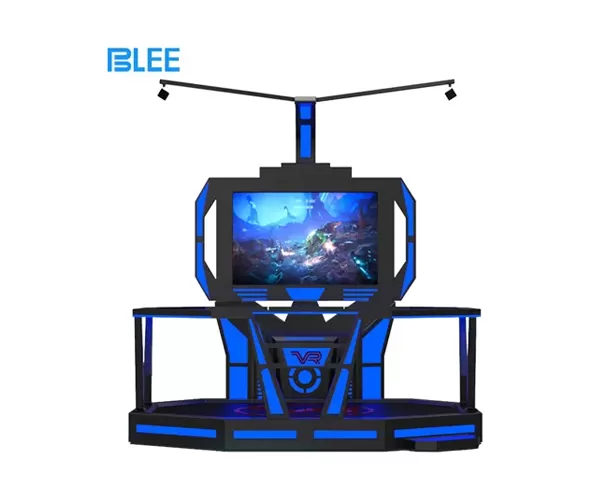


As tennis courts look for ways to modernize and enhance player experiences, technology plays a crucial role. Two popular options for commercial setups are VR tennis simulators and traditional sensor-based training systems. While both provide valuable features, they serve different purposes. This guide will help you determine the right choice based on business goals, customer demographics, and budget.
Use fully immersive virtual reality headsets and controllers to simulate real-world tennis gameplay.
Provide a wide variety of courts, weather conditions, and AI opponents.
Ideal for entertainment centers, VR arcades, and beginner-friendly venues.
Uses motion sensors, radar tracking, and AI-based video analysis to measure real-life strokes, ball speed, spin, and player movement.
More suited for professional training, coaching, and competitive players.
Often integrated with real courts for real-world practice benefits.
✅ You run an entertainment-focused business (VR arcade, sports bar, or gaming venue).
✅ You want an immersive, fun experience for casual players and social events.
✅ Space is limited, and you can’t install a full-sized court.
✅ Your goal is to attract tech-savvy, younger customers.
✅ You operate a commercial tennis training center, academy, or club.
✅ You want accurate real-world performance tracking for serious players.
✅ Your audience includes professional or competitive tennis players.
✅ You have the budget and space to install advanced analytics systems.
Feature | VR Tennis Simulators | Traditional Sensor Equipment |
Initial Investment | Lower ($5,000 - $50,000) | Higher ($10,000 - $150,000) |
Space Requirement | Minimal (indoor VR setup) | Full tennis court or partial setup |
Training Applications | Casual play, social fun, basic skill improvement | Professional coaching, technique improvement |
Revenue Potential | Great for hourly rentals, gaming leagues, events | Higher ROI from premium training, private coaching |
Maintenance | Low | Moderate to high (calibration, sensor replacements) |
The VR simulator is great for short-term engagement, promotions, and casual customers.
Traditional sensor-based equipment builds loyalty by offering serious training tools for long-term members.
A hybrid approach could also be beneficial—entertainment centers might use VR for fun, while training academies could integrate sensors for skill development.
For entertainment-based venues → Go with a VR Tennis Simulator for engaging, immersive gameplay.
For training-focused businesses → Choose Traditional Sensor Equipment to provide accurate, data-driven performance analysis.
For multi-purpose facilities → A combination of both may offer the best of both worlds!

 English
 français
 Deutsch
 Español
 italiano
 русский
 ไทย
ไทย português
 Malay
Malay română
 العربية